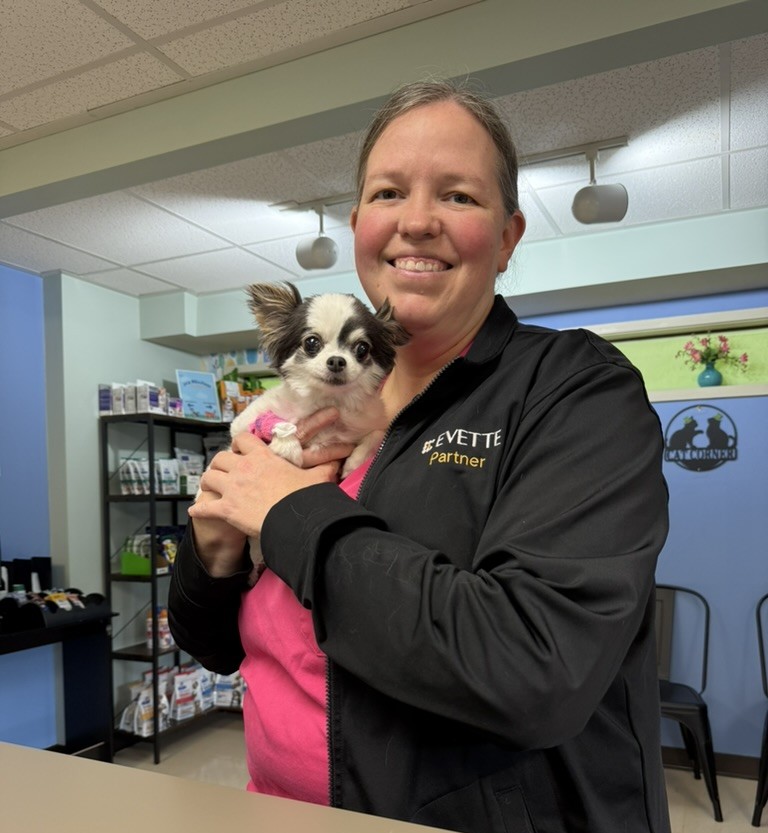
For Dr. Vanderwerff, a proud graduate of Kansas State University College of Veterinary Medicine, the transition from student to practicing veterinarian was as humbling as it was transformative. Looking back, she says the most valuable preparation for new graduates entering the field today lies in hands-on, real-world experience, especially in surgery and communication.
“Doing larger numbers of supervised spays and neuters can be very helpful,” she explains. “And client communication — I had to learn that on the job, which wasn’t ideal for anyone. Schools are getting better at teaching it now, which is a big improvement.”
While Dr. Vanderwerff credits her alma mater with providing a strong foundation, she believes that veterinary education must continue to evolve with the profession. In particular, she highlights a need for increased support around real-world preparation, affordability, and industry sustainability.
“The cost of education is huge, and there are very few grants or scholarships available,” she says. “We need more of those, and also need to find ways to reduce the overall cost of becoming a vet."
She pointed us to one innovative program at her alma mater: Kansas State’s Mobil Veterinary Unit. This mobile clinic allows vet students to gain real-world experience in rural and underserved areas — providing critical care while building their confidence and skills outside of the traditional classroom setting.
K-State Wellness on Wheels brings veterinary care to vulnerable populations.
.png)
Read about the student mobile vet clinic from Kansas State University Foundation.
Through her work as a relief veterinarian, Dr. Vanderwerff continues to apply the lessons she’s learned from both the classroom and the clinic, using her experience to make a difference in every hospital she steps into.
Her journey is a reminder that learning never stops, and that compassion, curiosity, and adaptability remain the cornerstones of great veterinary care.